
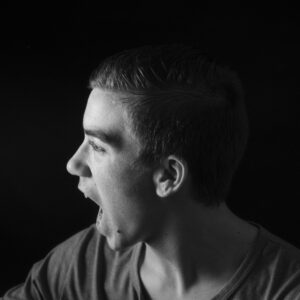
Craniomandibular Dysfunction (CMD): Assessment & Treatment

Greater safety in CMD therapy through knowledge, clinical reasoning, and practical tools.
Janne Säkkinen
5/5

 119

Course Details:

240 minutes

6 months

Course Overview

How can healthcare professionals better recognize and treat craniomandibular disorders (CMD) to improve patient outcomes?

This course provides a practical, evidence-based introduction to assessing and managing CMD, one of the most common causes of facial, jaw, and headache-related pain. Through clinical reasoning and case-based learning, you’ll gain the knowledge and tools needed to identify CMD symptoms early and deliver effective, person-centred care.

Designed for everyday clinical practice, the course combines current scientific evidence with practical treatment approaches that can be immediately applied in physical therapy, rehabilitation, and workplace health promotion.

  • Early recognition of CMD symptoms
  • Assessment of jaw, facial, and head pain
  • Evidence-based treatment planning
  • Musculoskeletal rehabilitation
  • Workplace health promotion
  • Clinical decision-making for patients of all ages
  • Understand the anatomy, physiology, and pathophysiology of CMD
  • Perform structured assessments and clinical evaluations
  • Apply evidence-based treatment techniques for CMD
  • Develop clinical reasoning for complex musculoskeletal conditions
  • Integrate craniofacial, craniocervical, and thoracic treatment approaches

Course Content

Target Audience

Meet the Instructor

Janne Säkkinen —
Physical Therapist

Janne Säkkinen is a physical therapist specializing in occupational physical therapy, musculoskeletal rehabilitation, and Orthopedic Manual Therapy (OMT). Since 2010, he has focused on improving physical performance and functional well-being through evidence-based treatment and ergonomic interventions. Alongside his clinical work at Terveystalo, Janne lectures on temporomandibular joint disorders (TMJ) and ergonomics, helping healthcare professionals translate scientific knowledge into practical strategies for everyday patient care.

Continuing Education Credits & Certificate

This course qualifies for continuing education credits from recognized professional associations.

Certificate

Upon completion, you will automatically receive a personalised certificate confirming your continuing education participation.

Our certificate of participation may also be submitted to professional associations as part of CPD and continuing education applications.

Overall rating of the course

No reviews yet

No comments yet

Peer Review

Simone Elsig, Physiotherapist OMT Svomp

MSc Physiotherapy, PhD Cand., HES-SO Valais-Wallis, Leukerbad

This course is a great introduction to TMD, with a good mix of theory, anatomy, examination techniques, treatment approaches, and exercises. It covers muscular, articular, and neurodynamic treatment approaches. The course is engaging and well-structured, combining text, images, videos, and plenty of references for further reading. Learning questions help reinforce what you’ve studied. I really enjoyed working through this course.”

Ready to Improve Your Clinical Approach to CMD?

Related Courses

Integration of neurodynamics into neurorehabilitation (INN®) Expert 2: Neurodynamic tests

In this course, you will learn how to apply neurodynamic tests specifically to people with neurological impairments. Another important part of the course is the palpation of peripheral nerves in order to familiarize yourself with their courses and to obtain further information on the interpretation of the test findings. Contents:
  • Course part 1: Test basics
  • Course part 2: Tests of the lower extremities and trunk
  • Course part 3: Tests of the upper extremity
Course language: German Target audience:
  • Therapists from all areas (physiotherapy, occupational therapy, speech therapy, sports therapy, etc.)
  • Doctors and physicians
  • Curative educators
  • Movement scientists
  • Anyone who works with people with a brain lesion and would like to know more about the relationship between structure, function, activity and independence.
You will need: Computer, laptop, or tablet Study time: 360 minutes Course duration: 6 months
Dart into the target

BeSmart - Understanding therapeutic goals and setting them correctly

In this course you will learn how to formulate goals professionally and apply them in everyday therapy.

Contents:
  • The ICF levels, in particular environmental factors and personal factors
  • Involvement of relatives, resources and barriers
  • Bottom up and top down
  • Distinction between performance and capacity
  • Independent - what does this mean for the target?
  • SMART
  • Final test
Course language: German Target audience:
  • Therapists from all areas (physiotherapy, occupational therapy, speech therapy, sports therapy, etc.)
  • Nurses
  • Doctors (CME credits)
  • Curative educators
  • Movement scientists
You will need: Computer, laptop, or tablet Study time: 60 minutes Course duration: 6 months
INN Spider web

Integration of Neurodynamics in Neurorehabilitation (INN®) Expert 1: Basics, Development and Application

Would you like to learn more about action and movement analysis involving neural mobility? In this INN® expert course, you will learn the theoretical basics in conjunction with practical examples. Contents:
  • Course part 1: Basics, development & application
  • Course part 2: Peripheral nervous system
  • Course part 3: Nervous system as a unit
  • Course part 4: Final test
Course language: German Target audience:
  • Therapists from all areas (physiotherapy, occupational therapy, speech therapy, sports therapy, etc.)
  • Doctors and physicians
  • Curative educators
  • Movement scientists
  • Anyone who works with people with a brain lesion and would like to know more about the relationship between structure, function, activity and independence.
You will need: Computer, laptop, or tablet Study time: 240 minutes Course duration: 6 months

Understanding and applying the ICF

Goal: The ICF as a model helps us enormously in our daily work and we don't have to know it down to the smallest detail. In this course you will learn how the ICF is structured and why this model helps you to understand the complex relationships that changes in health status bring with them. Contents:
  • The description of the ICF
  • The bio-psycho-social model
  • Diagnosis and ICF in context
  • Thinking model and application
  • Final test
Course language: Du kannst zwischen Deutsch und Französisch wählen. Target audience: Pflegefachpersonen, Physiotherapeut*innen, Ergotherapeut*innen, Sporttherapeut*innen, Ärztinnen und Ärzte, Orthopädietechniker*innen, Pädagog*innen, Neuropsycholog*innen You will need: Computer, laptop, or tablet. Study time: 60 minutes Course duration: 6 months

Scalable Education for Therapy and Rehabilitation Departments

Trusted by therapists, doctors, and rehabilitation professionals worldwide.

Shopping cart
Cancel the contract
Craniomandibular Dysfunction (CMD): Assessment & TreatmentCraniomandibular Dysfunction (CMD): Assessment & Treatment
 119Enroll Now
Scroll up