
Comprendre et appliquer la CIF

Tu apprendras ici les bases de l'ICF, notre langage commun dans le domaine de la santé.
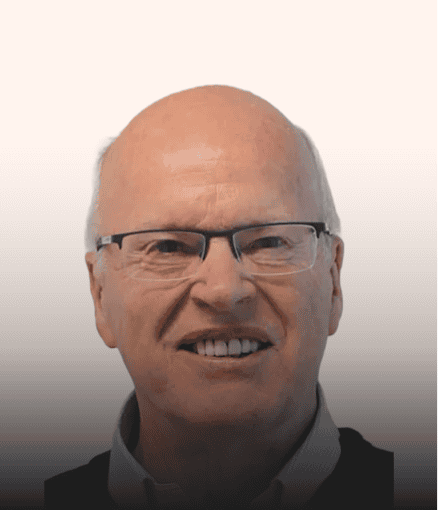
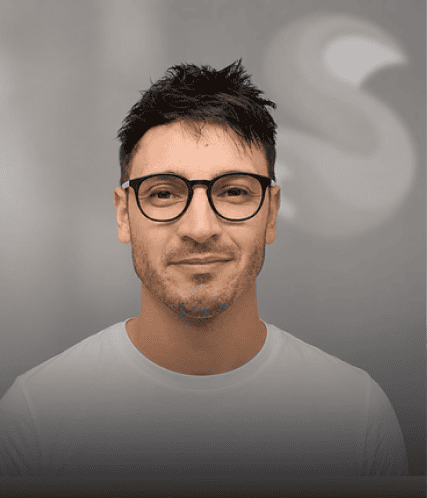
Dr. med. Beat Knecht und Jan Lieber, MSc OT
4.9/5

 35

Course Details:

60 minutes

6 months

Course Overview

How can the ICF help you better understand your patients and improve clinical decision-making?

The International Classification of Functioning, Disability and Health (ICF) provides a practical framework for understanding how health conditions influence a person’s daily life. Rather than focusing solely on diagnosis, the ICF considers body functions, activities, participation, and environmental factors to create a more complete picture of health.

This course explains the structure of the ICF and introduces the biopsychosocial model that underpins it. Through practical examples, you’ll learn how to apply ICF thinking in assessment, treatment planning, interdisciplinary collaboration, and rehabilitation without needing to memorise its extensive classification system.

  • Applying the ICF in everyday clinical practice
  • Holistic patient assessment
  • Goal setting and treatment planning
  • Interdisciplinary communication
  • Rehabilitation planning
  • Understanding health beyond medical diagnosis
  • Understand the structure and purpose of the ICF
  • Explore the biopsychosocial model of health
  • Understand the relationship between diagnosis and functioning
  • Apply ICF principles to clinical reasoning
  • Use the ICF as a practical framework for rehabilitation and interdisciplinary care

Course Content

Part 1: Understanding and Applying the ICF

Target Audience

Meet the Instructor

Dr. med. Beat Knecht

Dr. Beat Knecht served as Head Physician at Kinder-Reha Schweiz from 1984 to 2010, where he played a key role in shaping paediatric rehabilitation. He was closely involved in the development, introduction, and implementation of the ICF for children and adolescents and considers the ICF a fundamental framework for modern rehabilitation practice.

Jan Lieber, MSc OT

Jan Lieber is an occupational therapist who integrates the ICF into his daily clinical practice. He uses the framework to guide assessment, treatment planning, therapeutic interventions, and interdisciplinary collaboration, helping clinicians apply the ICF in a practical and meaningful way.

Continuing Education Credits & Certificate

This course qualifies for continuing education credits from recognized professional associations.

Certificate

Upon successful completion, you will automatically receive a personalised certificate as proof of your continuing professional education.

The certificate of participation may also be submitted to professional associations as part of CPD and MTD certification requirements.

Évaluation globale du cours

Commentaires

Sophia le 22.08.2024
Bonne introduction ou bonne révision du sujet
Les bons exemples. Il est un peu dommage que les questions du quiz final soient un peu identiques à celles du quiz du cours.
Karin-Maria le 04.06.2024
Bons exemples d'explication
Introduction au sujet expliquée de manière très concrète
Johanna le 07.05.2024
Une explication claire et concise
La lecture de Fox, les questions à choix multiples auxquelles il faut répondre, les explications vidéo et les dessins rendent le tout varié, intéressant et captivant ! Bravo
Andrea le 20.04.2024
Des bases expliquées de manière simple et attrayante
Conception attrayante et variée. Convient bien aux débutants. Les infirmières ne sont pas mentionnées comme public cible, bien qu'elles travaillent également avec l'ICF.
Lea le 17.04.2024
Tout était très compréhensible et illustré de manière attrayante grâce aux représentations variées et aux animations impressionnantes !

Peer Review

Peer review coming soon

Ready to Apply the ICF with Confidence?

Related Courses

Dysfonctionnement cranio-mandibulaire (DCM) : évaluation et traitement

Dieser digitale Kurs vermittelt ein praxisnahes Verständnis von craniomandibulären Dysfunktionen (CMD), einer häufigen Ursache für Gesichts-, Kopf- und Kieferschmerzen, die etwa 10–15 % der Bevölkerung betreffen. Medizinische Fachpersonen erhalten aktuelles Wissen, evidenzbasierte Strategien und praktische Werkzeuge, um CMD-Symptome besser zu erkennen und Patient:innen aller Altersgruppen wirksam zu unterstützen. Der Kurs verbindet klinisches Denken mit alltagstauglichen Behandlungsansätzen für die physiotherapeutische Praxis und die betriebliche Gesundheitsförderung. Teacher: Janne Säkkinen, PT Contenu :
  • Introduction au sujet
  • Contexte CMD
  • Anatomie, physiologie et physiopathologie
  • De l'anamnèse aux évaluations
  • Traitement cranio-mandibulaire et cranio-facial
  • Traitement cranio-cervical et thoracique
  • Raisonnement clinique intégratif dans le traitement des troubles de l'articulation temporo-mandibulaire
  • Brève vérification des connaissances
Langues d'enseignement : allemand et anglais Public cible :
  • Physiothérapeutes
  • Ergothérapeutes
  • Scientifiques du mouvement
  • Médecins
  • Infirmières et infirmiers
Il te faut : Ordinateur, ordinateur portable ou tablette Durée de la formation: 240 minutes Durée d'accès au cours : 6 mois

Basse vision : bases, diagnostic & mesures de soutien

Dans ce cours, tu apprendras ce que signifie réellement la "basse vision" et comment les limitations visuelles influencent la vie quotidienne. Apprends à mieux comprendre le comportement des personnes concernées et à les soutenir de manière ciblée.

Contenu :
    • Introduction au thème
    • Définitions & termes
    • Développement & déviations de la vision
    • Examen & thérapie
    • Mesures de soutien & aides au quotidien
    • Brève vérification des connaissances
Langue du cours : Deutsch, Englisch Public cible : • Therapeut*innen aus allen Bereichen (Physiotherapie, Ergotherapie, Logopädie, Sporttherapie usw.) • Pflegefachpersonen • Ärztinnen und Ärzte • Heilpädagog*innen und Lehrpersonen • Bewegungswissenschaftler*innen Il te faut : Ordinateur, ordinateur portable ou tablette Durée de la formation: 90 minutes Durée d'accès au cours : 6 mois
Fléchettes dans la cible

BeSmart - Comprendre et fixer correctement les objectifs thérapeutiques

Dans ce cours, tu apprendras comment réussir à formuler des objectifs de manière professionnelle et comment les appliquer dans le quotidien de la thérapie.

Contenu :
  • Les niveaux de la CIF, en particulier les facteurs environnementaux et les facteurs liés à la personne
  • Implication des proches, ressources et barrières
  • Bottom Up et Top Down
  • Distinction entre performance et capacité
  • Indépendant - qu'est-ce que cela signifie pour l'objectif ?
  • SMART
  • Test final
Langue du cours : allemand Public cible :
  • thérapeutes* de tous les domaines (physiothérapie, ergothérapie, logopédie, thérapie sportive, etc.)
  • Infirmières et infirmiers
  • Médecins (crédits CME)
  • Pédagogues curatifs
  • Scientifiques du mouvement
Il te faut : Ordinateur, ordinateur portable ou tablette Durée de la formation: 60 minutes Durée d'accès au cours : 6 mois

Scalable Education for Therapy and Rehabilitation Departments

Trusted by therapists, medical doctors and rehabilitation professionals worldwide.

Panier d'achat
Résilier le contrat
Comprendre et appliquer la CIFComprendre et appliquer la CIF
 35Enroll Now
Faire défiler vers le haut