
Intégration de la neurodynamique dans la neuroréhabilitation (INN®) Expert 2 : Tests neurodynamiquesIntégration de la neurodynamique dans la neuroréhabilitation (INN®) Expert 2 : Tests neurodynamiques
- Instructor:
- Rating:
- 6 months access
- Certificate included
- Downloadable handout
- Self-paced online learning
€ 474
Course Details:
- Learning Time:
- Access Period:
360 minutes
6 months
Course Overview
How can neurodynamic testing improve clinical reasoning and treatment outcomes in neurorehabilitation?
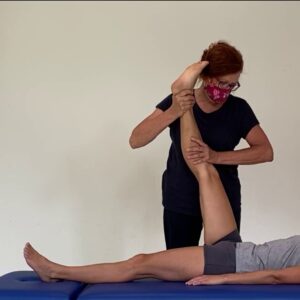
This course teaches you how to safely perform neurodynamic tests on healthy individuals, people with neurological impairments, and children while developing the confidence to interpret findings in a clinical context. Through practical demonstrations and hands-on learning, you’ll understand how peripheral nerve mobility influences movement, function, and rehabilitation.
A major focus is placed on palpating peripheral nerves, understanding their anatomical pathways, and recognising sensitive areas that contribute to accurate assessment and clinical decision-making. You’ll also learn how to adapt testing techniques for individuals with severe neurological conditions or limited verbal communication.
As Part 2 of the INN® Basic Digital Course, this programme forms an essential step toward the complete Integration of Neurodynamics into Neurorehabilitation (INN®) Basic Course. Completing all four INN® Expert courses awards the Basic Course certificate, which qualifies participants to attend INN® practical courses.
Practical Application
- Neurodynamic assessment in neurorehabilitation
- Clinical movement analysis
- Peripheral nerve palpation
- Assessment of patients with neurological impairments
- Adapted testing for children and individuals with limited communication
- Evidence-informed clinical reasoning
What you all Learn
- Perform neurodynamic tests safely and systematically
- Understand the anatomical principles behind neurodynamic testing
- Palpate peripheral nerves and identify clinically relevant findings
- Adapt testing procedures for neurological patients and children
- Interpret neurodynamic test results using structured clinical reasoning
- Apply assessment findings to support rehabilitation planning
Course Content
Part 1: Test Basics
- Introduction and Course Goals
- Prerequisites
- Test Rules on the Model
- Test Rules for Neurological Patients
- Knowledge Check
Part 2: Tests of the Lower Extremities & Trunk
- Straight Leg Raise (SLR): Anatomy & Technique
- SLR for Neurological Patients
- SLR Variations
- Sacral Plexus Palpation
- Prone Knee Bend (PKB): Anatomy & Technique
- PKB for Patients
- PKB Variations & Palpation
- Slump Test & Passive Neck Flexion (PNF)
- Quality Criteria & Minimal Clinically Important Difference
- Knowledge Check
Part 3: Tests of the Upper Extremities
- Brachial Plexus
- ULNT 1
- ULNT 2a & ULNT 2b
- ULNT 3a & ULNT 3b
- Test Adaptations for Patients
- Brachial Plexus Palpation & Additional Tests
- Quality Criteria & Minimal Clinically Important Difference
- Knowledge Check
Part 4: Final Assessment
- Final Test
Target Audience
- Physiothérapeutes
- Occupational Therapists
- Speech Therapists
- Sports Therapists
- Anyone interested in the relationship between structure, function, activity, and independence
- Physicians
- Curative Educators
- Movement Scientists
- Professionals working with people following brain injury
Meet the Instructor

Nora Kern —
MSc PT, OMPT
Nora Kern specialises in neurorehabilitation, neurodynamic assessment, and clinical reasoning. Her teaching focuses on helping clinicians differentiate between structural causes of movement limitations while adapting neurodynamic testing for people with brain injuries and children. She emphasises evidence-based reassessment to improve function, participation, and quality of life.

Dr. Petra Marsico—
MSc PT
Dr. Petra Marsico specialises in paediatric neurorehabilitation and movement analysis. Through neurodynamic testing, she helps clinicians better understand movement behaviour in children and adolescents with neurological and musculoskeletal conditions, enabling more precise treatment and greater functional independence.
Continuing Education Credits & Certificate
This course qualifies for continuing education credits from recognized professional associations.
- German Association of Occupational Therapists (DVE): 8 points
- German Association of Physiotherapists (ZVK): 8 points
- Umbrella Organization of Medical-Technical Services (MTD): 8 teaching units
- Ergoverband Switzerland (EVS): 6 points
- Physioswiss: 6 points
Certificate
Upon completion, you will automatically receive a personalised certificate confirming your continuing education participation.
This course is Part 2 of the INN® Basic Digital Course. Completing all four INN® Expert courses awards the INN® Basic Course Certificate, which qualifies participants to attend INN® practical courses.
Our certificate of participation may also be submitted to professional associations as part of CPD and continuing education applications.
Commentaires
Peer Review
Christine Zehr
pediatric physiotherapist, CAS in Developmental Neurological Therapy Bobath Baby, Lucerne Children's Hospital
” This course lets you learn neurodynamic tests at your own pace. The step-by-step instructions for each test and video demonstrations of nerve palpation offer real added value and genuinely new insights for practice. “
Ready to Strengthen Your Neurodynamic Assessment Skills?
Related Courses
Système nerveux central et autonome
- Première partie du cours : système nerveux central
- Partie 2 du cours : système nerveux autonome
- Partie 3 du cours : neuroplasticité
- Partie 4 du cours : test final
- thérapeutes* de tous les domaines (physiothérapie, ergothérapie, logopédie, thérapie sportive, etc.)
- Médecins
- Pédagogues curatifs
- Scientifiques du mouvement
- Infirmières et infirmiers
- Toute personne souhaitant en savoir plus sur le système nerveux central, ses fonctions, ses lésions et sa plasticité.
- 360-500 minutes
- Multilingual
Dysfonctionnement cranio-mandibulaire (DCM) : évaluation et traitement
- Introduction au sujet
- Contexte CMD
- Anatomie, physiologie et physiopathologie
- De l'anamnèse aux évaluations
- Traitement cranio-mandibulaire et cranio-facial
- Traitement cranio-cervical et thoracique
- Raisonnement clinique intégratif dans le traitement des troubles de l'articulation temporo-mandibulaire
- Brève vérification des connaissances
- Physiothérapeutes
- Ergothérapeutes
- Scientifiques du mouvement
- Médecins
- Infirmières et infirmiers
- 240 minutes
- Multilingual
Entraînement neurocentré – une introduction
- Définitions
- Systèmes d'entrée
- Conditions préalables et état d'esprit
- Neuroplasticité et entraînement
- Contrôle des connaissances
- Physiothérapeutes
- Ergothérapeutes
- Thérapeutes sportifs
- Scientifiques du mouvement
- Médecins
- Toutes les personnes intéressées par l'entraînement neurocentré
- 90 minutes
- German
Intégration de la neurodynamique dans la neuroréhabilitation (INN®) Expert 1 : Principes, développement et application
- Première partie du cours : bases, développement et application
- Partie 2 du cours : système nerveux périphérique
- Partie 3 du cours : le système nerveux en tant qu'unité
- Partie 4 du cours : test final
- thérapeutes* de tous les domaines (physiothérapie, ergothérapie, logopédie, thérapie sportive, etc.)
- Médecins
- Pédagogues curatifs
- Scientifiques du mouvement
- Toute personne travaillant avec des personnes souffrant d'une lésion cérébrale et souhaitant en savoir plus sur le lien entre structure, fonction, activité et autonomie.
- 240 minutes
- German
Scalable Education for Therapy and Rehabilitation Departments
Trusted by therapists, medical doctors and rehabilitation professionals worldwide.
"The course is very well structured, contains a lot of theoretical knowledge and is also put directly into practice with the two case studies. I am looking forward to being able to apply the knowledge I have acquired."

"I found the course very exciting, with a logical flow and lots of good suggestions for everyday life."

"Balanced relationship between theory and practice, knowledge transfer and self-control, very exciting and instructive!"

"Fox reading aloud, multiple-choice questions to answer, video explanations and drawings make it varied, interesting and exciting! Bravo"

"The training is very well structured and organized. Good repetition of the anatomy and subsequent explanation for splint construction."

"Thank you very much for this free course. I only knew the GMFCS and the MACS level before. But as a speech therapist, the CFCS is also very interesting for me. "

"Super good concept and great structure, the questions in the final test could vary a little from the course content to really check understanding."

"Best lesson in cerebral palsy for the upper extremities I have ever had in 35 years of professional experience!"

"I really liked the patient examples. As well as the repetition with the questions. Overall, it was a great, intensive course that lasted more than 8 hours 😉 "

"The course is very well structured, contains a lot of theoretical knowledge and is also put directly into practice with the two case studies. I am looking forward to being able to apply the knowledge I have acquired."

"I have realized how important neurodynamics is in neurological rehabilitation and will approach my patients with a different mindset in the future. Thank you for the good overview and the interactive structure. The individual patient examples were also very helpful."

"Thank you for such a valuable tool! I appreciate the high standard of clear, evidence-based and practical presentation - it's a success. And of course I'm delighted that it doesn't cost anything, which makes it easy to spread the word."

"I was hoping for an update on the subject of neuroplasticity. I have now learned a lot of new things that can be clearly related to practice. I really appreciated the fact that I was able to work through the lessons more than once and interrupt them at any time."

"The course was very intensive, took me longer than 5 hours of study and helped me a lot with my understanding. I think home study with free time organization is great!"