
Seahorse Training – Sweat, Fun, and Good CompanySeahorse Training – Sweat, Fun, and Good Company
- Teacher:
- Rating:
- 6 months of access
- Certificate included
- Downloadable Handout
- Digital Learning at Your Own Pace
CHF 22
Course Information
- Study time:
- Access:
45 minutes
6 months
Course Overview
How can movement, breathing, touch, and social interaction support the mental health of children and adolescents? This course introduces the evidence-based program “Seepferdchen Training—Sweat, Fun, and Good Company,” which was developed to support children with an overstimulated nervous system through physical therapy interventions.
You will learn about the neurophysiological foundations of mental well-being and understand how physical activity, breathing, touch, and positive social experiences contribute to emotional regulation and resilience.
The course is designed for therapists who work with children and adolescents, and combines research with practical strategies for everyday therapy practice.
Practical Application
- Supporting Children's Mental Health
- Dealing with Overstimulated Nervous Systems
- Incorporating Physical Activity into Therapy
- Promoting Emotional Regulation
- Strengthening Social Cohesion and Well-Being
- Application of Evidence-Based Physical Therapy Strategies
What You'll Learn Here
- Understanding the Neurophysiology of Mental Health in Children and Adolescents
- Understanding How Stress Affects the Developing Nervous System
- Learn the basic principles of Seepferdchen training
- Using movement, breathing, touch, and social interaction as therapeutic tools
- Integrating Evidence-Based Strategies into Everyday Clinical Practice
- Introduction to the Topic
- Mental Health in Children and Adolescents
- The Nervous System Under Constant Stress
- Seahorse Training
- Knowledge Check / Final Test
- Physical therapists
- Occupational therapists
- Therapists who work with children and adolescents
- Professionals interested in children's mental health
- For both those just starting their careers and experienced therapists

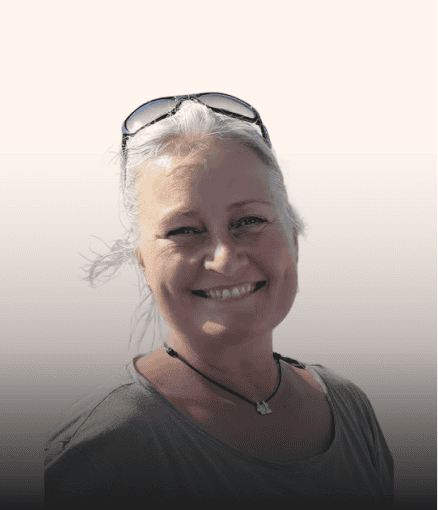
Pernille Thomsen —
MSc PT
Specializes in mental health and neurophysiology in children. Since 2009, she has focused on understanding overstimulated nervous systems and the effects of anxiety, stress, depression, ADHD, and autism in children and adolescents. In her private practice in Denmark, she leads the Seepferdchen training program. She also serves as a coach for people with developmental disabilities and for the Danish Special Olympics women’s national team.

This course qualifies participants for continuing education credits from recognized professional associations.
- German Association of Occupational Therapy (DVE): 1 point
- Physio Germany: 1 point
- Umbrella Organization for Advanced Medical, Therapeutic, and Diagnostic Health Professions (MTD): 1 class period
- Ergoverband Schweiz (EVS): 1 point
- Physioswiss: 1 point
- Pediatrics Switzerland: 1 CME credit
Certificate
Upon completion, you will automatically receive a personalized certificate as proof of your participation in the training.
Our certificate of participation can also be submitted to professional associations as part of continuing education applications.
Comments
Peer Review
Christine Zehr
Pediatric Physical Therapist, CAS in Bobath Baby Developmental Neurological Therapy, Lucerne Children's Hospital
“Brilliantly explained and designed with engaging graphics that can be put to immediate use when working with children. A thoroughly well-designed, practical course.”
Ready to support children's mental health through physical activity?
Similar Courses
BeSmart – Understanding and Setting Therapeutic Goals Correctly
- 60 minutes
- German
Executive Functions & Their Relevance in Everyday Life
- 120 minutes
- German
Understanding and Applying the ICF
- 60 minutes
- Multilingual
Scalable Continuing Education for Therapy and Rehabilitation Departments
Tried and tested by therapists, doctors, and rehabilitation specialists.
"The course is very well structured, covers a lot of theoretical knowledge, and, thanks to the two case studies, directly applies that knowledge to real-world situations. I'm looking forward to putting what I've learned into practice." – Harieta F., Upper Limb Mobility

"I found the course very engaging; it had a logical structure and offered many useful tips for everyday life." – Christa S., Executive Functions

"A good balance between theory and practice, knowledge transfer and self-assessment—very engaging and informative!" – Carina L., Upper Limb Mobility

"The Fox reads aloud, and the multiple-choice questions, video explanations, and drawings make it varied, interesting, and exciting! Bravo!"

"The training course is very well structured and organized. It provides a good review of anatomy, followed by an explanation of splint construction."

"Thank you very much for this free course. Until now, I was only familiar with the GMFCS and MACS levels. But as a speech-language pathologist, I also find the CFCS very interesting.""

"A really great concept and excellent structure; the questions on the final test could deviate a bit more from the course material to truly test understanding."

"The best lesson on cerebral palsy affecting the upper extremities I've ever had in my 35 years of professional experience!"

"I really liked the patient examples. I also liked the review with the questions. Overall, it was a great, intensive course format that lasted more than 8 hours 😉"

"The course is very well structured, covers a lot of theoretical knowledge, and—thanks to the two case studies—also applies that knowledge directly to real-world situations. I look forward to putting what I've learned into practice."

"I've come to realize how important neurodynamics is in neurological rehabilitation, and I'll approach my patients with a different mindset going forward. Thank you for the clear overview and the interactive format. The individual patient examples were also very helpful."

"Thank you for such a valuable tool! I appreciate the high quality of the clear, evidence-based, and practical content—it's really well done. And of course, I'm glad it's free; that makes it easy to recommend to others."

"I was just hoping for an update on neuroplasticity. Instead, I got a course where I learned a lot of new things that can be clearly applied in practice. I especially appreciated being able to work through the lessons multiple times and pause them at any time."

"The course was very intensive, took me more than 5 hours to complete, and really helped me understand the material. I think self-study with a flexible schedule is great!"