
BeSmart – Therapeutische Ziele verstehen und richtig setzenBeSmart – Therapeutische Ziele verstehen und richtig setzen
- Instructor:
- Rating:
- 6 months access
- Certificate included
- Downloadable handout
- Self-paced online learning
€ 35
Course Details:
- Learning Time:
- Access Period:
60 Minuten
6 months
Course Overview
How do you create therapeutic goals that are meaningful, measurable, and truly relevant to your patients?
This course provides a practical introduction to professional goal setting in rehabilitation using the SMART framework and the International Classification of Functioning, Disability and Health (ICF). You’ll learn how to define patient-centred goals that guide effective therapy while considering environmental factors, personal factors, and the individual’s functional abilities.
Suitable for therapists across a variety of clinical settings, the course demonstrates how structured goal setting improves clinical reasoning, patient engagement, and rehabilitation outcomes in everyday practice.
Practical Application
- Patient-centred goal setting
- Rehabilitation planning
- SMART goal development
- Applying ICF principles in practice
- Clinical decision-making
- Collaborative treatment planning with patients and families
What you will learn
- Understand the role of the ICF framework in rehabilitation
- Differentiate between performance and capacity
- Incorporate environmental factors, personal factors, resources, and barriers into goal setting
- Involve patients and relatives in the rehabilitation process
- Apply SMART principles to create effective therapeutic goals
- Use bottom-up and top-down approaches to support clinical reasoning
Course Content
- Introduction to the Topic
- ICF Levels: Environmental & Personal Factors
- Involvement of Relatives, Resources & Barriers
- Bottom-Up and Top-Down Approaches
- Performance vs Capacity
- Independence – What Does It Mean for the Goal?
- SMART Goal Setting
- Final Test
Target Audience
- Physiotherapists
- Occupational Therapists
- Speech Therapists
- Sports Therapists
- Nurses
- Physicians
- Curative Educators
- Movement Scientists
- Healthcare professionals involved in rehabilitation and goal setting
Meet the Instructor

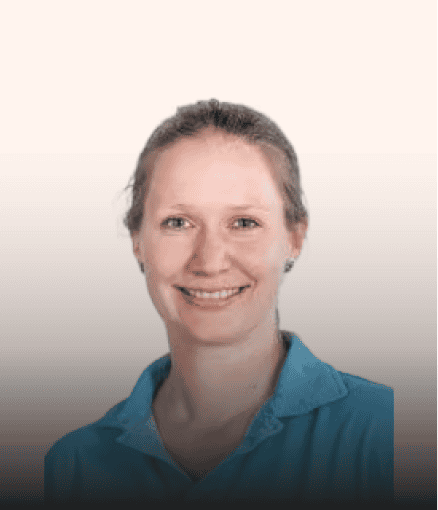
Franziska Spreitler,—
MSc PT, OMPT
Franziska Spreitler is Head of Therapies and a member of the Clinic Management team at Children's Rehab Switzerland, University Children's Hospital Zurich. She holds a Master of Science in Neurorehabilitation Research along with advanced qualifications in leadership, management, and healthcare administration. With many years of experience leading rehabilitation goal-setting processes, Franziska has delivered numerous lectures on SMART goal setting and specialises in helping clinicians apply structured, patient-centred rehabilitation planning in everyday practice.
Continuing Education Credits & Certificate
This course qualifies for continuing education credits from recognized professional associations.
- German Association of Occupational Therapists (DVE): 1 point
- German Association of Physiotherapists (ZVK): 1 point
- Umbrella Organization of Medical-Technical Services (MTD): 1 teaching unit
- Ergoverband Schweiz (EVS): 1 point
- Physioswiss: 1 point
- Pediatrics Switzerland: 1 CME credit
Certificate
Upon completion, you will automatically receive a personalised certificate confirming your continuing education participation.
Our certificate of participation may also be submitted to professional associations as part of CPD and continuing education applications.
Kommentare
Peer Review
Katharina Huth
BSc OT Head of Advanced Rehabilitation Technologies, REHAB Basel
“Everything you need for successful goal-setting. Compact, clear, and easy to apply in everyday practice.”
Ready to Set Better Therapeutic Goals?
Related Courses
Craniomandibuläre Dysfunktion (CMD): Assessment & Behandlung
- Einführung ins Thema
- Hintergrund CMD
- Anatomie, Physiologie & Pathophysiologie
- Von der Anamnese zu den Assessments
- Craniomandibuläre & craniofaciale Behandlung
- Craniocervicale & thoracale Behandlung
- Integratives Clinical Reasoning bei der Behandlung von CMD
- Kurzer Wissenscheck
- Physiotherapeut:innen
- Ergotherapeut:innen
- Bewegungswissenschaftler:innen
- Ärztinnen und Ärzte
- Pflegefachpersonen
- 240 Minuten
- Multilingual
Kauergang verstehen & behandeln
Ziel: Du kannst die Entstehungskomponenten, die zum Kauergang führen, differenziert analysieren und verstehen. Du erkennst den Einfluss der Sensorik und kannst daraus therapeutische Strategien ableiten – somit kannst du die funktionellen Fähigkeiten deiner Patient*innen stärken, Rückfälle vorbeugen und nachhaltige Veränderungen begleiten.
Inhalt:-
- Einführung in das Thema
- Somatosensorik & Kauergang
- Entwicklung des Kauergangs
- Behandlung & Prophylaxe bei Kauergang
- Abschlusstest
- 120 Minuten
- German
Moderne Elektrostimulation verstehen und anwenden
In diesem Kurs lernst du die Elektrostimulation kennen und weisst danach, wie sie im Therapiealltag anwendbar ist.
Inhalt:- Einführung in die Elektrostimulation
- Elektrostimulation bei Schädigung des 1. Motoneurons
- Elektrostimulation bei Schädigung des 2. Motoneurons
- Evidenz der Elektrostimulation
- Abschlusstest
- 90 Minuten
- German
ICF verstehen und anwenden
- Die Beschreibung der ICF
- Das bio-psycho-soziale Modell
- Diagnose und ICF im Zusammenhang
- Denkmodell und Anwendung
- Abschlusstest
- 60 Minuten
- German
Scalable Education for Therapy and Rehabilitation Departments
Trusted by therapists, medical doctors and rehabilitation professionals worldwide.
"The course is very well structured, contains a lot of theoretical knowledge and is also put directly into practice with the two case studies. I am looking forward to being able to apply the knowledge I have acquired."

"I found the course very exciting, with a logical flow and lots of good suggestions for everyday life."

"Balanced relationship between theory and practice, knowledge transfer and self-control, very exciting and instructive!"

"Fox reading aloud, multiple-choice questions to answer, video explanations and drawings make it varied, interesting and exciting! Bravo"

"The training is very well structured and organized. Good repetition of the anatomy and subsequent explanation for splint construction."

"Thank you very much for this free course. I only knew the GMFCS and the MACS level before. But as a speech therapist, the CFCS is also very interesting for me. "

"Super good concept and great structure, the questions in the final test could vary a little from the course content to really check understanding."

"Best lesson in cerebral palsy for the upper extremities I have ever had in 35 years of professional experience!"

"I really liked the patient examples. As well as the repetition with the questions. Overall, it was a great, intensive course that lasted more than 8 hours 😉 "

"The course is very well structured, contains a lot of theoretical knowledge and is also put directly into practice with the two case studies. I am looking forward to being able to apply the knowledge I have acquired."

"I have realized how important neurodynamics is in neurological rehabilitation and will approach my patients with a different mindset in the future. Thank you for the good overview and the interactive structure. The individual patient examples were also very helpful."

"Thank you for such a valuable tool! I appreciate the high standard of clear, evidence-based and practical presentation - it's a success. And of course I'm delighted that it doesn't cost anything, which makes it easy to spread the word."

"I was hoping for an update on the subject of neuroplasticity. I have now learned a lot of new things that can be clearly related to practice. I really appreciated the fact that I was able to work through the lessons more than once and interrupt them at any time."

"The course was very intensive, took me longer than 5 hours of study and helped me a lot with my understanding. I think home study with free time organization is great!"